Fashion Guide
7 Simple Everyday Outfit Formulas That Look Put Together
The easiest everyday outfits usually come from repeatable formulas, not from constantly buying more clothes. Once you know which proportions, shoes and layers work for your routine, getting dressed becomes much simpler.
Quick answer
Use one simple base, then balance it.
Start with one simple base, balance fitted and relaxed proportions, use a controlled color palette, then add one practical layer or accessory.
Outfit comparison
Which everyday outfit formula fits the plan?
| Formula | Overall feel | Best for | Effort |
|---|---|---|---|
| White T-shirt + straight-leg jeans + clean sneakers | Easy casual | Errands, coffee, weekends | Very easy |
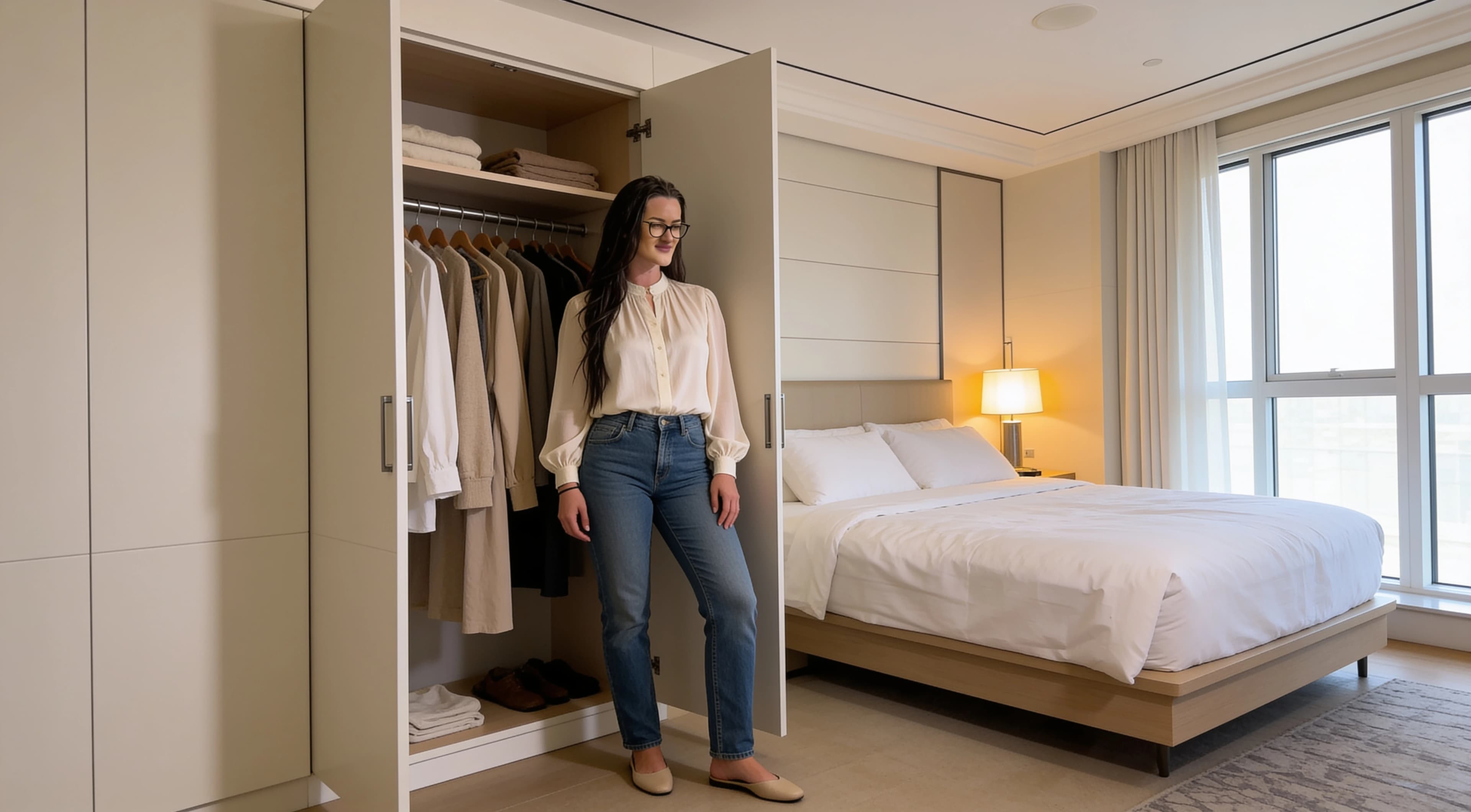
| White button-up + straight jeans + loafers or flats | Polished casual | Lunch, casual meetings, city days | Easy |
| Fitted knit top + wide-leg trousers + simple flats | Balanced / polished | Working from a café, daytime plans | Easy |
| Tank or fitted tee + cardigan + midi skirt | Soft casual | Spring/autumn daytime | Easy |
| Basic tee + blazer + jeans + loafers | Smart casual | Meetings, dinner, city plans | Easy |
| Lightweight knit + black trousers + ankle boots | Simple refined | Cooler days, evening casual | Very easy |
| Simple midi dress + denim jacket or cardigan + sneakers/flats | One-piece casual | Warm days, lunch, weekends | Very easy |
Seven formulas
7 everyday outfit formulas
These simple outfit ideas are built from ordinary pieces: jeans, T-shirts, button-ups, trousers, knitwear, skirts, dresses and practical shoes. Use them as starting points, then adjust color, fabric weight and layers for your weather and routine.
FORMULA 01
White T-shirt + straight-leg jeans + clean sneakers
Best for
Errands, coffee, weekends and casual days with walking.
Why it works
The straight jeans give the T-shirt a little structure, while clean sneakers keep the outfit practical. It works best when the tee fits neatly at the shoulder and the jeans are not overly tight or overly oversized.
Watch for
If both the T-shirt and jeans are very loose, the outfit can look accidental. A half tuck, slightly cropped tee or sharper denim wash can make the proportions clearer.
One easy variation
Swap the white tee for a fine striped tee or add a light cardigan when the weather changes.
FORMULA 02
White button-up + straight jeans + loafers or flats
Best for
Lunch, casual meetings, city days and low-effort polished plans.
Why it works
A button-up shirt adds clean lines to denim without making the outfit formal. Loafers or flats make the same jeans feel more intentional than sneakers, especially in black, brown or cream.
Watch for
A stiff shirt with stiff jeans can feel uncomfortable. Choose one piece with a little softness, such as relaxed cotton, broken-in denim or a softer flat.
One easy variation
Wear the shirt open over a fitted tank for a more casual version, or tuck it fully for a sharper look.
FORMULA 03
Fitted knit top + wide-leg trousers + simple flats
Best for
Working from a café, daytime plans and polished casual outfits.
Why it works
The fitted knit balances the volume of wide-leg trousers. This is a useful proportion formula because the outfit has shape without needing a tight bottom or a complicated layer.
Watch for
Trouser length matters. If the hem puddles heavily over flat shoes, the outfit can lose its clean line.
One easy variation
Use a sleeveless knit in warm weather or add a cropped jacket that ends near the waist.
FORMULA 04
Tank or fitted tee + cardigan + midi skirt
Best for
Spring or autumn daytime, relaxed lunches and easy transitional weather.
Why it works
The fitted base keeps the cardigan from looking bulky, while the midi skirt adds movement. This works especially well when the cardigan texture contrasts gently with a smoother skirt.
Watch for
If the cardigan is long and the skirt is full, the outfit can feel heavy. A shorter cardigan or a more streamlined skirt usually keeps the shape balanced.
One easy variation
Wear the cardigan buttoned as the top, or swap flats for clean sneakers if the plan is more casual.
FORMULA 05
Basic tee + blazer + jeans + loafers
Best for
Meetings, dinner, city plans and smart casual days.
Why it works
The blazer gives a simple tee-and-jeans base a stronger outline. Loafers keep the outfit grounded and practical while still looking more polished than athletic sneakers.
Watch for
A very formal blazer can look disconnected from distressed denim. Cleaner jeans and a softer blazer usually work together more naturally.
One easy variation
Use a black tee for a more evening-friendly version, or choose a navy blazer with mid-blue denim for a softer daytime look.
FORMULA 06
Lightweight knit + black trousers + ankle boots
Best for
Cooler days, casual evenings and simple refined outfits.
Why it works
Black trousers and ankle boots create a clean base, while a lightweight knit adds texture and warmth. The outfit feels refined because the palette is controlled and the shapes are simple.
Watch for
Heavy boots can overpower slim trousers. If the boot is chunky, a straighter trouser leg often balances it better.
One easy variation
Try cream, grey, navy or soft brown knitwear depending on what works with your coat and bag.
FORMULA 07
Simple midi dress + denim jacket or cardigan + sneakers/flats
Best for
Warm days, lunch, weekends and one-piece dressing.
Why it works
A midi dress removes the need to match a top and bottom. A denim jacket makes it more casual; a cardigan makes it softer. Sneakers are practical, while flats make the outfit feel a little neater.
Watch for
The layer should not hide the dress completely. A jacket or cardigan that shows the waistline or dress shape usually looks more balanced.
One easy variation
Use a ribbed dress with sneakers for a casual version, or a plain woven dress with flats for lunch or daytime plans.
How to choose an outfit when you don't know what to wear
When your wardrobe feels noisy, make the decision smaller. Start with the practical constraints, then choose one formula instead of trying to invent a completely new look.
1. Where am I going?
2. What is the weather?
3. Do I want casual, polished or somewhere between?
4. Choose the bottom or dress first.
5. Add one simple top or layer.
6. Choose shoes based on how much walking you will do.
7. Stop before adding unnecessary accessories.
Use color without making the outfit complicated
A neutral base plus one accent is often enough: denim with white and red, black trousers with cream and olive, or navy with white and tan. Tonal outfits also work well when the shades are close but not identical.
Black, white, navy, cream and denim combinations are useful because they repeat easily. Not everything needs to match exactly; pieces just need to feel related. For more practical color guidance, read how to choose clothing colors that photograph well.
How to balance fitted and relaxed pieces
A fitted top with wide trousers, a relaxed shirt with straight jeans, or a loose knit with a simple skirt can all create visual balance. The idea is not to follow a strict rule; it is to make sure the outfit has a clear shape somewhere.
If both pieces are relaxed, use another cue: a visible wrist, defined shoe, half tuck, shorter jacket or cleaner neckline. Small proportion choices often matter more than adding extra accessories.
Shoes can change the same outfit
Sneakers
Sneakers make jeans, trousers and dresses feel more casual and practical. Clean, simple pairs are easiest to repeat.
Flats
Flats keep an outfit comfortable while looking a little neater than sneakers, especially with skirts, dresses and straight jeans.
Loafers
Loafers add structure to denim and trousers, which is useful when the rest of the outfit is very simple.
Ankle boots
Ankle boots add weight and work well with cooler-weather layers, black trousers and midi dresses.
Low heels
Low heels can make a familiar jeans, trouser or dress outfit feel dinner-ready without changing the whole look.
A small everyday wardrobe that supports these outfits
You do not need this exact list, but it shows how a compact wardrobe can support many casual outfit formulas. If you want a broader system, start with the simple capsule wardrobe guide.
Common everyday outfit mistakes
Adding too many focal points
A bright bag, statement shoe, dramatic jacket and bold jewelry can all be good pieces, but they do not need to compete in the same outfit. Let one element lead.
Choosing uncomfortable shoes for the actual plan
Shoes change the look, but they also decide whether the outfit works in real life. If the day involves walking, start there before choosing the rest.
Ignoring proportions
Two relaxed pieces can work together, but the outfit usually needs a clear shape somewhere: a tuck, shorter layer, cleaner shoe or visible waistline.
Buying pieces that work with only one outfit
A good everyday item should usually work with several tops, bottoms or layers. If it needs one exact combination, it may not solve many wardrobe problems.
Over-accessorizing
Everyday outfits often look better when the final step is editing. A bag, simple jewelry and sunglasses may be enough.
Dressing for a photo rather than the real occasion
An outfit can photograph well and still be wrong for the weather, walking distance or setting. Practicality is part of looking put together.
Quick checklist before leaving
✓ Is it appropriate for where I'm going?
✓ Can I comfortably walk and sit in it?
✓ Do the proportions feel balanced?
✓ Are there too many competing colors or accessories?
✓ Do I actually need another layer or accessory?
Related styling idea
If you already use simple outfit formulas and want a slightly more specific dressed-up example, see how to style a satin midi dress. The same ideas apply: start with the occasion, choose practical shoes, then add only the layer or accessory that helps.
About the visual examples
Sofia is a fictional virtual creator. Any outfit imagery on this page is digitally created and used to illustrate styling combinations, proportions and color relationships.
About this guide
Sofia is a fictional virtual creator. This guide is published by SofiaRusso.vip and maintained by the site owner. AI tools may assist with drafting or illustrative imagery, while the final published material is reviewed before publication.